How to Care for Exotic Leather Cowboy Boots the Right Way
You didn't spend good money on a pair of exotic leather cowboy boots just to watch them crack, fade, and fall apart before their time. Whether you're wearing ostrich, alligator, snake, or stingray, exotic leather boots are an investment — and they deserve to be treated like one. Done right, a quality pair of exotics will outlast your truck, your heartbreaks, and half your wardrobe. Done wrong, you'll ruin something that should've lasted decades. Here's how to take care of exotic leather cowboy boots the right way.
Know What You're Working With Before You Do Anything
Exotic leather isn't a single material — it's a category, and every skin within it has its own personality, its own grain, and its own needs. Treating alligator the same way you treat snake is how boots die young.
- Ostrich: Recognizable by those distinctive raised quill follicles, ostrich leather is actually one of the more forgiving exotics. It's naturally supple and holds up well over time, but those pores need to stay conditioned or they'll dry out and lose that signature texture.
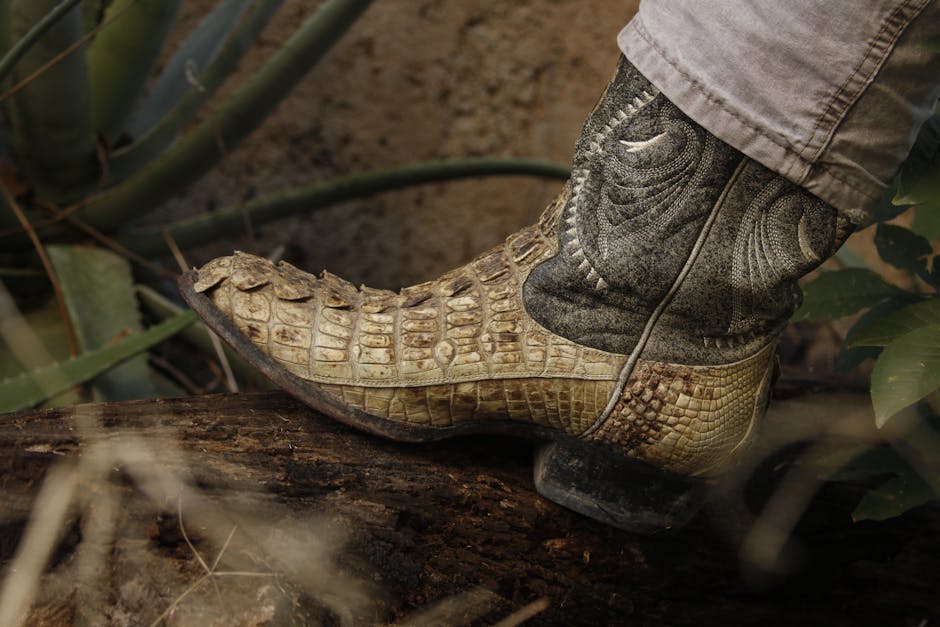
- Alligator and Crocodile: Dense, structured, and tough as hell — but don't let that fool you. Gator leather needs regular conditioning to stay flexible. Let it dry out and it'll start to scale and crack in ways that can't be undone.
- Snakeskin: Beautiful and unmistakable, but it's the most delicate of the bunch. The overlapping scales can lift, separate, or crack if exposed to too much moisture or left without conditioning. Handle with care.
- Stingray: Some of the most durable exotic leather out there, with a pebbly texture that resists scuffs naturally. Still needs conditioning, but it's a workhorse compared to snake.
If you're not 100% sure what your boots are made of, bring them into a western wear shop — or stop by our Hat Bar at Marathon Village and we'll take a look. Knowing your leather is step one. Everything else follows from there.
Clean Them Regularly — But Keep It Gentle
You're going to get your boots dirty. That's not a problem — that's life. The problem is letting dirt, dust, and grime sit on exotic leather for days at a time. Debris works its way into the grain and starts breaking down the surface. Make cleaning a habit.
After every wear, take a soft-bristled brush or a dry cloth and knock the dust off. Don't let it build up. For any stubborn dirt or dried mud, use a slightly damp cloth with warm water and work in small, gentle circles. The key word is slightly damp — exotic leather absorbs moisture differently than standard cowhide, and soaking it even briefly can cause warping, staining, or scale damage on snakeskin.
Skip the household cleaners, dish soap, and anything with harsh chemicals. These leathers aren't built for that. Use products that are specifically formulated for exotic leather. When in doubt, less is more.
Condition Like You Mean It
Conditioning is what keeps exotic leather alive. Without it, even the finest pair of cowboy boots will dry out, lose their luster, and eventually crack. How often you condition depends on how often you wear them and what climate you're in — Nashville humidity is actually somewhat forgiving, but air conditioning and dry winters can pull moisture out of leather fast.
A general rule: condition your exotics every 4–6 weeks with regular wear, or any time they start to look or feel dry. Use a conditioner made specifically for exotic leather — not standard neatsfoot oil or mink oil, which can darken the hide, clog pores, or soften the structure too aggressively.
Apply conditioner with a soft cloth, working it in gently and evenly. Let the boots rest for 15–20 minutes, then buff off the excess. Don't over-apply — flooding the leather with conditioner is just as damaging as neglecting it.
Polish and Protect the Right Way
A good polish brings out the depth and shine in exotic leather and adds a layer of protection against the elements. But you've got to match the product to the leather type. Cream polishes work well for smoother exotics like alligator and ostrich. Snakeskin and stingray often do better with a light, specialized exotic leather protector rather than a traditional polish.
Always test any new product on a small, hidden area of the boot first. Color-changing or unexpected reactions happen — better to find out on the heel than on the toe cap.
For water resistance, look for a light spray protectant made for exotic hides. Nashville weather doesn't always give you warning, and a quick protective coat before you head out can save you a lot of grief.
Store Them Properly When You're Not Wearing Them
How you store your boots matters almost as much as how you clean them. Here's what to do — and what not to do:
- Use boot trees to hold the shape. Exotic leather will crease and deform if left to slump in a pile on your closet floor.
- Keep them out of direct sunlight. UV exposure fades and dries out exotic leather faster than almost anything else.
- Store in a cool, dry place with decent airflow. Avoid plastic bags or airtight containers — leather needs to breathe.
- If you're putting them away for an extended period, give them a good conditioning session first and wrap them loosely in a breathable cotton pillowcase or boot bag.
Know When to Call a Pro
Some jobs aren't DIY. Deep scuffs, cracked scales, lifting snakeskin, or major water damage are all situations where you want to hand your boots over to a skilled cobbler who has experience with exotic leather. The wrong repair attempt can make things significantly worse. A good boot repair specialist — particularly one familiar with western footwear — is worth every cent.
Boots That Last a Lifetime Start With the Right Pair
Exotic leather boots are a statement — in the rodeo arena, on lower Broadway, or walking through Marathon Village on a Saturday afternoon. They're part of a tradition that takes western fashion seriously, the same way we do at Steel & Saddle. Take care of your boots, and they'll take care of you for years to come.
Ready to build out the rest of your western wardrobe? Browse our full collection online — from western outerwear to cowboy hats built for real wear — or come see us in person at our store and Hat Bar in Marathon Village, Nashville. We'll help you find the pieces that belong with those boots.