How to Dress Well Without Overthinking It
There's a lot of noise out there about style these days. Influencers telling you that you need seventeen different pieces to look decent. Fashion bloggers dissecting your undertones, your seasonal color palette, your body type category. It's enough to make anyone's head spin — and frankly, it's enough to make you want to throw on a plain white tee and call it done. Here's the truth nobody's shouting loud enough: dressing well doesn't require any of that. It never did. What it requires is knowing yourself, trusting a few solid principles, and then getting the hell out of your own way.
Start With What Actually Works
Look in your closet right now. Find the piece you reach for most often — the shirt, the jeans, the jacket you've worn until it's nearly worn through. That's your baseline. That's what actually works for your body, your lifestyle, and your eye. Don't ignore that signal.
The best-dressed people in any room are the ones wearing what they actually believe in. Not what they think they're supposed to wear. Not what was trending last season. What they believe in. A ranch hand doesn't spend much time second-guessing a pair of Wranglers that fit right. A rodeo queen doesn't overthink a boot that breaks in perfectly. That certainty reads — and it reads well.
If you live in western wear because you work on land, because you grew up in it, or because you just respect the utility and the style of it, own that completely. Don't try to force yourself into some other mold because an algorithm told you to. Build from the foundation that already works and resist the urge to reinvent yourself every six months.
Stick to a Consistent Palette
This is the trick that sounds complicated but is actually the simplest thing in the world once you internalize it: limit your colors. Not forever, not rigidly — but as a general operating principle, work within a palette that naturally plays well together.
In western fashion, this comes easy. The palette is already built in. Earthy tones — tobacco, bone, rust, sage, slate, faded black — work together almost effortlessly. When everything in your wardrobe belongs to the same general family of color, you don't have to think in the morning. You just get dressed. And every combination works.
That's not an accident. It's the same reason a well-worn denim jacket looks right with almost anything, and why a sun-faded western shirt feels at home whether you're at a ranch, a honky-tonk, or a show at a Nashville venue. The palette does the work so you don't have to.
Fit Is Everything — And It Always Has Been
No piece of clothing — regardless of how expensive, how rare, or how well-designed — looks good if it doesn't fit. This is non-negotiable. A shirt that's too boxy loses its shape. Jeans that sag in the wrong places drag down the whole look. A jacket that pulls across the shoulders looks uncomfortable because it is.
Fit is the single highest-return investment you can make in your wardrobe. Find what fits your body the way it is right now, not the way you think it might be someday. Clothes that fit well make you look like you know something other people don't. That's the whole game.
In western wear especially, fit carries real significance. A well-fitted pearl-snap shirt tucked into a great pair of jeans says something. It's not flashy. It's not trying too hard. But it's exactly right — and people notice that.
Invest in Your Anchor Pieces
Every strong wardrobe is built around a handful of anchor pieces — items with enough quality and character that everything else orbits around them. In western style, these tend to be obvious: a good hat, a great pair of boots, a jacket that's earned its wear.
Your hat, in particular, is worth taking seriously. The difference between a hat that looks like a prop and one that looks like yours is real. The right cowboy hat — whether that's a felt for fall and winter or a straw for the summer heat — becomes part of how people know you. It sits on your head like punctuation at the end of a sentence that says exactly what you mean.
If you're unsure where to start, the felt vs. straw debate alone is worth understanding. Felt hats carry more weight and formality — they're built for cooler months and dressier occasions. Straw hats breathe, deflect sun, and carry that easy-going working-ranch quality. Neither is wrong. Knowing which one fits the moment is the kind of thing that separates someone who wears western clothing from someone who wears western clothing well.
Stop Chasing Trends — Chase Character
Western culture has never been particularly interested in trends. There's a reason the same silhouettes, the same fabrics, the same design language has held for generations. It works. It holds up. And there's something deeply unfashionable — in the best possible way — about a person who dresses with character instead of chasing whatever's cycling through the feed right now.
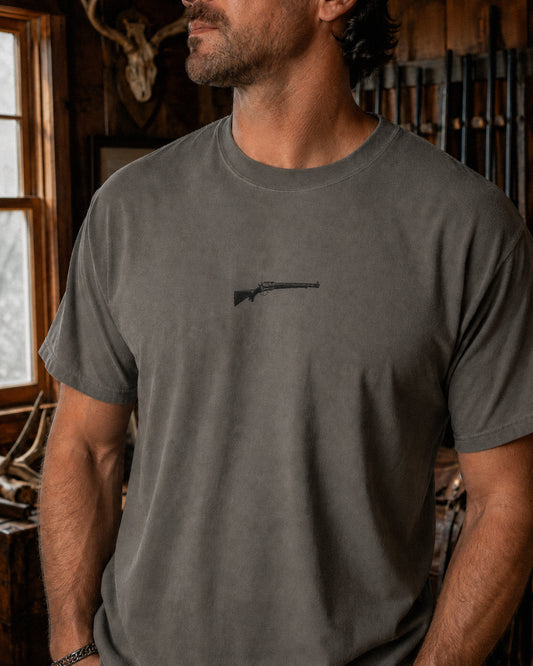
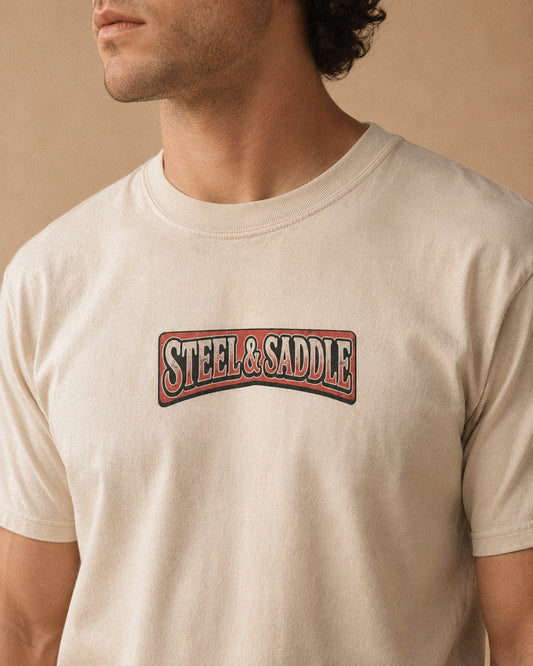
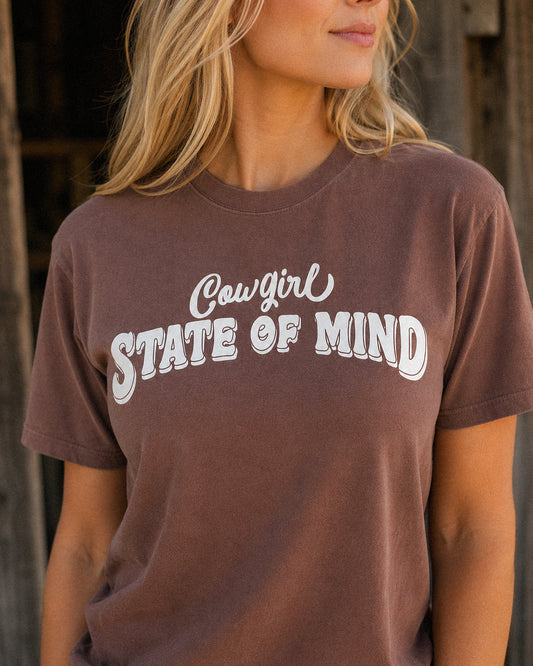
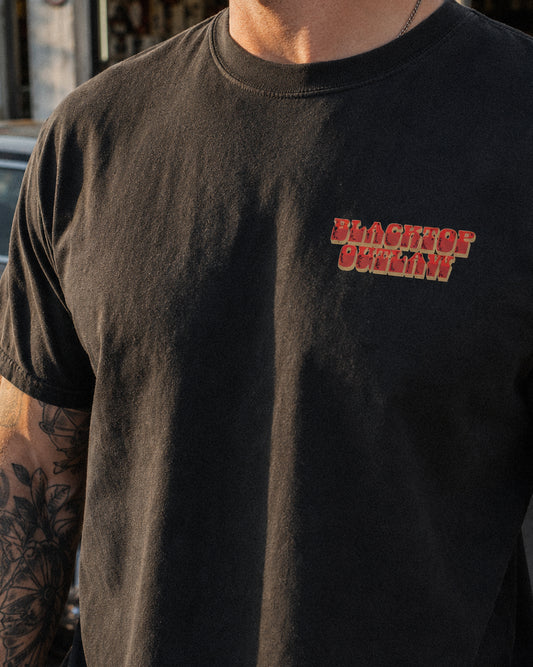
Character in clothing means wear and patina. It means a graphic tee that says something real, not something calculated. It means outerwear that's been through weather and still looks intentional. It means you bought something because it meant something to you — not because it was recommended by a sponsored post.
That's the outlaw western ethos in a sentence: dress for who you actually are, not who the algorithm thinks you should be.
The Short Version
- Find your baseline and build from it — don't fight what already works.
- Keep your palette tight and let the colors do the heavy lifting.
- Prioritize fit above everything else.
- Invest in a few anchor pieces — especially a hat and boots worth wearing.
- Dress with character, not with trends.
If you're ready to build a wardrobe that actually means something, Steel & Saddle is the place to start. Shop online at steelsaddle.co or come find us in person at Marathon Village in Nashville, where our Hat Bar lets you try on, customize, and walk out with something that's genuinely yours. No overthinking required.