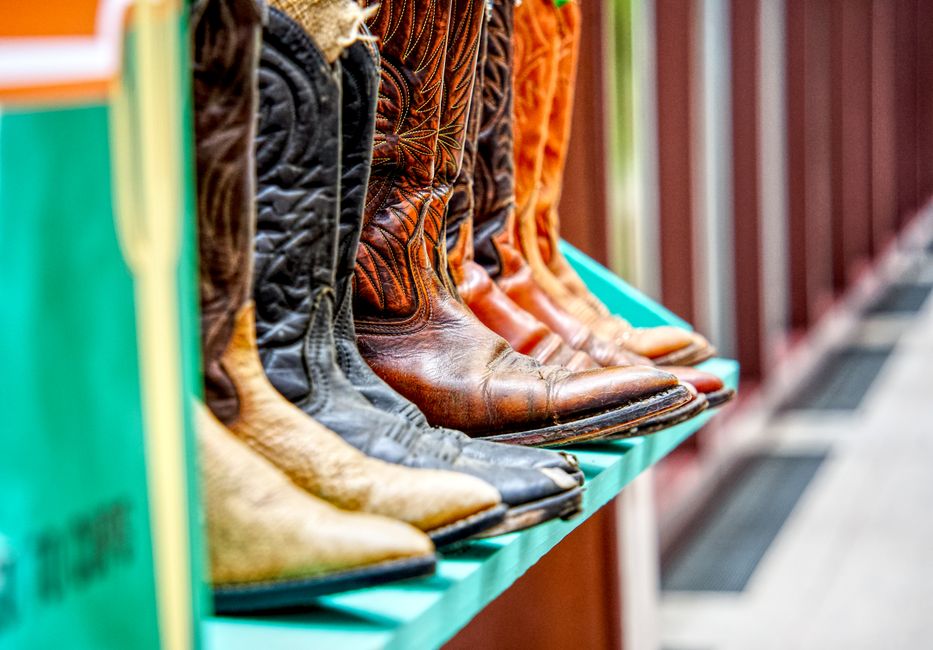
Roper Boots vs Cowboy Boots: Know Your Heel and Your Purpose
If you spend any time around ranches or rodeos, you'll notice that not all boots are built the same. The difference between a roper boot and a traditional cowboy boot comes down to function, and function dictates form in the real world of western wear. A man or woman who knows the difference between these two styles understands something fundamental about the work and lifestyle that demands them.
The Heel: Where Form Meets Function
The most obvious distinction sits right at the bottom of the boot. A roper boot has a lower, wider heel that sits closer to the ground. It's built for grip and stability when you're dismounting quickly or standing in a stance that requires balance on solid earth. The heel angles out slightly, designed to catch rope under your boot when you're dallying down a calf or steer. This isn't theory—it's generations of cowboys learning what works when the stakes are real money and livestock that don't cooperate.
The heel angles out slightly, designed to catch rope under your boot when you're dallying down a calf or steer.
A traditional cowboy boot, by contrast, features a higher, narrower heel angled back toward the foot. That design serves a different purpose entirely. The higher heel locks into a stirrup and keeps your foot from sliding through, which matters when you're mounted and moving at speed across rough country. The narrower profile lets that heel seat deeper into the stirrup, creating the security and control a rider needs.
Built for Different Work
Ropers spend considerable time on the ground. They're dismounting, running, turning sharply, and positioning themselves relative to an animal or a rope. The lower heel of a roper boot grounds you literally and figuratively. It distributes your weight differently and gives you the stability you need when you're not in the saddle. Walk into any ranch supply store from Tennessee to Texas, and you'll see hands working cattle wearing ropers for this exact reason.