


How to Resole Cowboy Boots and When It's Worth It
A good pair of cowboy boots is like a good horse: they're an investment that pays dividends if you treat them right. But leather wears down, soles get thin, and eventually you're going to have to make a decision: repair or replace. Out here in Nashville and across ranch country, folks know that a quality boot can outlast three pairs of cheap ones if you're willing to put in the work. Resoling is that work, and it's worth understanding before you hand your favorite pair over to just anyone.
What Resoling Actually Means
Resoling isn't some complicated process that requires a degree in bootmaking. A cobbler removes the worn-out sole from your boot and attaches a new one. They'll typically use the same stitching holes the original maker used, keeping the structural integrity intact. It's straightforward work that's been done the same way for generations, whether you're at a ranch supply store outside Nashville or out in the middle of nowhere.
The trick is finding someone who knows western boots. Not all cobblers are equal.
You need someone familiar with the specific demands of cowboy boots: the heel attachment, the arch support, the way the sole flexes when you're working cattle or riding. This isn't dress shoe territory.
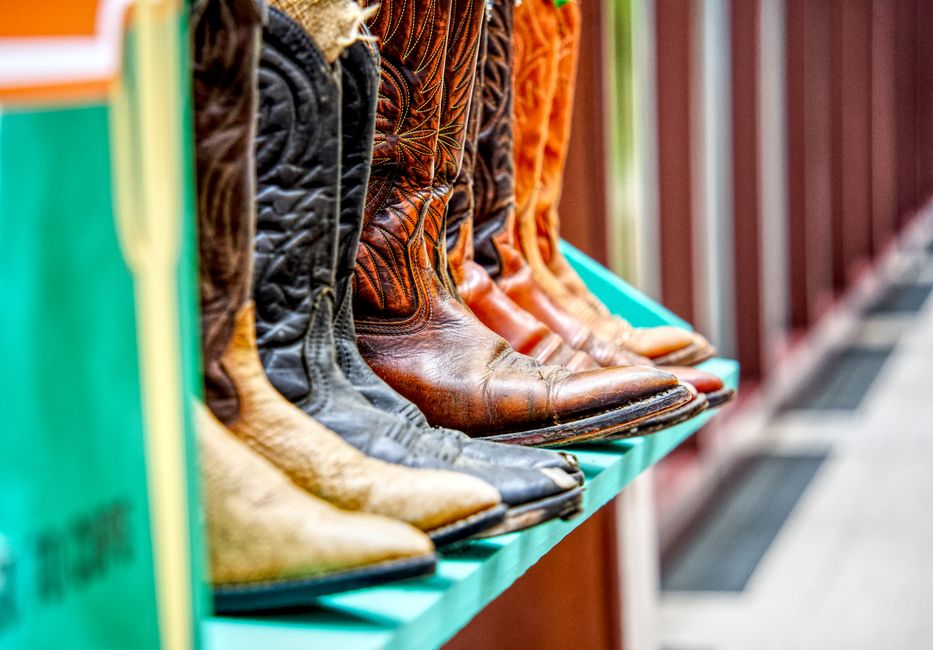
Can Your Boots Be Resoled?
Before anything else, find out how your boots were built. Most quality cowboy boots are welted: a strip of leather called the welt is stitched to the upper, and the sole is stitched to the welt. A cobbler can cut that stitching, pull the old sole, and sew a new one on without touching the upper. A welted boot can be resoled more than once if the leather above it holds up.
Cheaper boots are often cemented, meaning the sole is glued on. Some cobblers can still put a new sole on a cemented boot, but the result rarely lasts like a welted repair, and the cost can get close to a new pair. Look at the edge of the sole: if you see a row of stitching running around the welt, you're probably in good shape. If it's smooth rubber with no stitching, ask a cobbler before you count on a resole.
Signs It's Time
- Thin spot at the ball of the foot. Press on the sole with your thumb. If it gives like cardboard, or you can feel every pebble when you walk, it's time.
- A hole, or a crack across the sole. Don't wait on this one. Water gets in, and once the insole and welt get soaked and dry out over and over, you can lose the whole boot.
- Heels worn at an angle. Most of us wear the outside corner first. Replacing the heel alone, early, is cheap and saves the rest of the boot.
- Stitching coming loose along the welt, or the sole starting to separate at the toe.
When Resoling Makes Sense
Look at the upper. If the leather is still solid, if the shaft hasn't cracked, if the fit is still right around your foot and calf, you've got a candidate for resoling. A worn sole on an otherwise good boot is money in the bank, because the broken-in leather that finally fits you right is the part you can't buy new.
Resoling is usually not worth it when the upper is cracked through at the flex point, the leather has dried out past saving, the boot never fit right in the first place, or it's a cheap cemented pair where the repair costs about what the boots did. Prices vary a lot by shop and by the sole you pick, so get a quote first and weigh it against what a comparable new pair would cost you.
Knowing how to care for your western wear so it lasts means knowing when repair makes more sense than replacement. It's part of the philosophy that quality matters more than quantity in western wear, and a good pair of boots with fresh soles can keep you going for years. That's the kind of western boot care that makes them last a decade.
Leather Sole or Rubber Sole?
A resole is your chance to change the sole, not just replace it.
- Leather soles are the traditional pick. They slide into a stirrup clean, breathe, and look right on a dress boot. They're slick on wet pavement and wear faster on concrete.
- Rubber soles grip better, last longer on hard ground, and handle rain. They're the better choice if your boots spend more time on sidewalks and barn floors than in the saddle.
- Leather with a rubber heel or toe tap splits the difference, and a lot of folks in town go this way.
Riding a lot? Stick with leather or a low profile rubber that won't hang up in the stirrup. Walking Broadway on a Saturday night? Rubber will save your feet and your dignity.
What Happens at the Cobbler
- The cobbler checks the upper, the welt and the heel to make sure the boot is worth the work.
- The old sole and usually the heel come off.
- Worn cork or filler under the insole gets replaced so the boot doesn't feel hollow.
- The new sole is stitched to the welt, the heel is rebuilt, and the edges are trimmed and finished.
- A good shop will clean and condition the leather before handing them back.
Plan on being without your boots for a while, often a week or more depending on how busy the shop is. That's a good reason to have a second pair in the rotation.
Make the Next Sole Last Longer
- Rotate pairs so each one gets a day to dry out.
- Get heels done early, before the wear reaches the heel base.
- Clean and condition the leather a few times a year so the upper outlives the sole.
- Dry wet boots slowly, away from a heater, with newspaper or boot trees inside.
Treat them right and the same pair can carry you through more resoles than you'd guess, getting more yours every year. Just like a hat that's been shaped to your head, or a tee that's faded right. Speaking of which, ours start out faded: western graphic tees on heavyweight garment dyed cotton, printed in Nashville.


